A Character’s Want Gives a Scene Its Pull
A character’s want gives a scene its pull by turning a quiet moment into a choice, with clear tactics and resistance that keep readers engaged.
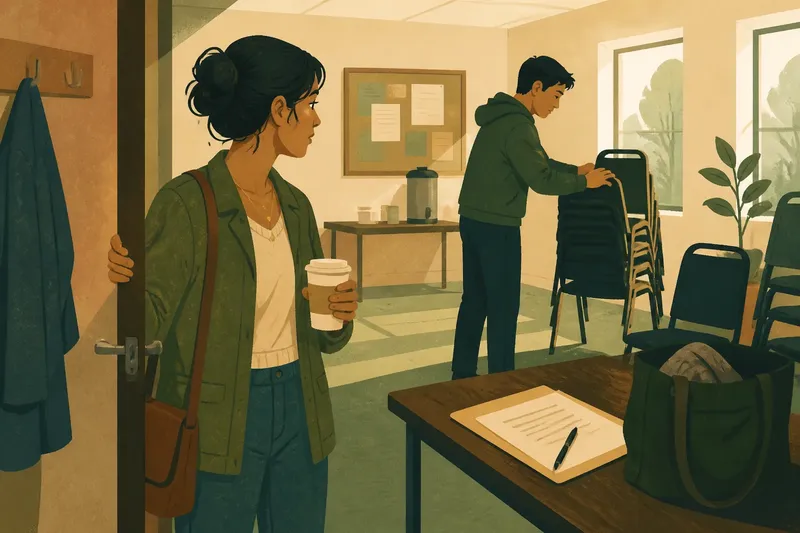
Mara has one hand on the community-center door and the other around a paper cup of cooling coffee. Inside, her brother is stacking chairs after a meeting; she needs him to sign a form before he leaves. Nothing in the room is on fire, and the larger story can wait. Still, the moment has a question: will Mara get the signature, and what will she do if she does not?
A character’s want gives a scene its pull by giving the reader a specific outcome to anticipate. The want does not need to be grand. It needs to matter to the character now, be possible to pursue in the scene, and meet some resistance. In Mara’s case, the form concerns their late mother’s storage unit. Her brother’s signature would let her take responsibility for it, but asking him risks opening a disagreement she has been avoiding.
What does Mara want before the scene ends?
“She wants her brother to understand” is too broad to direct action. “She wants him to sign the form before he goes home” gives Mara something to do and gives the scene a visible point of pressure. A scene-level want is the outcome a character is trying to secure in that particular stretch of story.
The immediate want can sit beneath a larger desire. Mara may want to settle the family’s unfinished business, or to be treated as capable of handling it. Those deeper concerns give the signature emotional weight, but the form keeps the present scene concrete. Readers can follow both levels without being told that the scene is important.
Try phrasing a want as a verb and an object: persuade him to sign, keep the envelope, get an answer, or avoid a promise. If the sentence describes a mood or a theme, translate it into an outcome someone could recognize. “Mara feels guilty” describes her state; “Mara wants to leave without admitting she misplaced the key” gives that state a direction.
How does the want become visible?
A want pulls most strongly when it shapes what the character does. Mara enters the room, sets the form on the chair beside her brother, and starts with an ordinary question about the meeting. She does not announce her family history. She is trying to create a moment in which asking will feel possible.
That distinction matters because a scene is not compelling just because a character cares intensely. If the want never affects behavior, the reader has little to track. Let the character make choices that serve the immediate aim: wait for a private moment, offer a reason, change the subject, or reach for the paper and then stop.
The object of the want can be tangible, but it need not be. An answer, a concession, a chance to leave, or a refusal to discuss something can all be pursued. What matters is that the reader can tell what would count as progress, even if the character’s tactics are indirect.
What makes a quiet scene resist the character?
Resistance is whatever prevents the character from getting the desired outcome easily. It may come from another person’s refusal, a practical obstacle, a competing need, or the character’s own hesitation. Mara’s brother might be ready to leave, but the sharper resistance is that he has already told her he does not want to decide anything about the storage unit tonight.
That boundary is not a device for making him a villain. He may have a reasonable concern: he does not want their mother’s belongings cleared out in a hurry. His position gives Mara a real obstacle and a reason to adjust. If he simply signs because she asks, the scene ends before her choices have mattered.
Resistance need not escalate into a fight. A pause, a question about what happens next, or a form left unsigned can be enough if it changes the character’s options. The writer’s task is not to manufacture noise; it is to keep the desired outcome from arriving without consequence.
How can the scene change without becoming dramatic?
Imagine Mara asks directly for the signature, and her brother says he will not sign until he knows what she plans to do with the boxes. She could argue that she has already sorted everything. Instead, she admits she has not opened the smaller boxes because she is afraid of what they contain. The admission does not solve the practical problem, but it changes the interaction: he now understands that her urgency is not only about clearing space.
This is a useful turn because the scene’s movement comes from a new choice. Mara began by trying to obtain a signature without discussing the underlying fear. Now she has to decide whether honesty is worth the possibility of hearing no. Her want remains active, but the route toward it has changed.
A quiet scene can turn through a small shift in knowledge, leverage, trust, or intention. Ask what the character knows at the end that they did not know at the beginning, or what they are now willing to do. If the answer is “nothing,” the scene may still be atmospheric, but it may not need to occupy a full scene in this story.
What should happen if the character does not get what they want?
A scene does not have to deliver its stated outcome. Mara’s brother might still refuse to sign, while agreeing to look through the boxes with her on Saturday. The signature is delayed, but the scene has produced a new arrangement and exposed the real source of Mara’s haste.
That result gives the next scene something to work with. Mara may accept the shared task, push for a decision sooner, or reconsider whether the storage unit is the problem she needs to solve. A useful scene ending often leaves the character with a changed choice, not merely an unanswered question.
When revising, compare the opening want with the ending state. Did the character get the thing, lose the chance, discover a cost, or choose a different aim? If none of those changed, look for a decision or response that makes the scene’s outcome legible. You do not need to explain the lesson afterward; the altered terms can carry it.
Which questions help shape a character’s scene want?
Can a character have more than one want in a scene?
Yes, but one immediate want should usually organize the action. Mara can want the signature and want to avoid discussing the boxes, though those aims conflict; that conflict is precisely what makes her approach difficult.
Does the character need to state the want aloud?
No. The want can remain private while behavior makes it readable. A character who keeps the form within reach and waits for a clear opening communicates an aim without explaining it.
Can a scene work if the character’s want is modest?
Yes. A small outcome can carry emotional weight when it touches a relationship, fear, or choice the story has prepared. The scale of the want matters less than the resistance and consequence attached to it.
What if the character does not know what they want?
Give them a provisional aim: leave the room, keep the conversation pleasant, or get through the evening without making a decision. Their attempt may reveal a more specific desire as the scene unfolds.
What is not worth adding to create tension?
Do not add an arbitrary interruption, a sudden secret, or a raised voice simply to make a quiet scene feel active. Those devices can distract from the character’s actual problem. If Mara’s hesitation already forces a choice, another complication may only blur the scene’s center.
It is also not worth naming the character’s want in every paragraph. Establish it through the situation, then let actions and resistance carry the pressure. A reader can follow a clear aim without repeated reminders.
For a final pass, write one sentence naming the character’s immediate want, then one sentence naming what changes by the end. If both are specific, a character’s want gives a scene its pull even when the larger plot stays quiet. The last useful question is whether the ending leaves the character with a different next move; if it does, the scene has made room for the story to continue.